Complete versus directional blocking
Two different tools with the same name. One removes entry and exit, the other only removes entry.
Built in·updated 2026-08-20
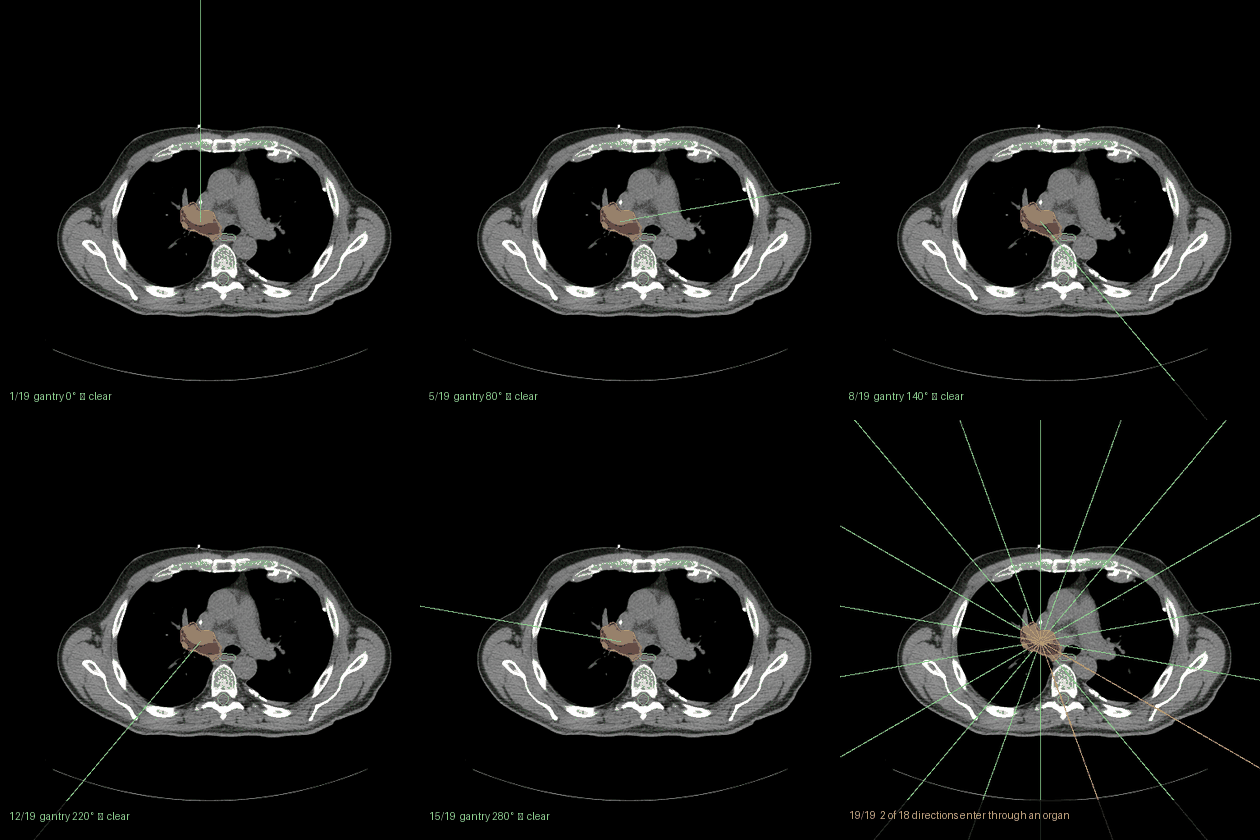
Helical blocking has two modes and they are not degrees of the same thing:
- Complete — every beamlet that passes through the structure is removed, entering or leaving.
- Directional — beamlets are allowed to reach the structure after passing through the target. Entry dose is removed, exit dose is kept.
Directional is the one you want for an organ that sits behind the target, because the exit beam is doing useful work on the way in. Complete is for an organ that must not see the beam at all.
The combination. The published complete-directional-complete technique for left breast places a complete block as a rectangular structure connected 3 cm beyond the PTV margin, with the directional region defined by the intersection of that block and the aperture at the nodal margin.
What it costs. Blocking reliably lowers dose in the blocked organ and reliably raises it somewhere else — the breast studies report reduced lung and cardiac dose with increased spinal dose and longer delivery. On a scored case that trade is only worth making if the criteria weight the two structures differently, so check the point values before blocking anything.
How the structure is built
Where the numbers come from
- Helical tomotherapy with a complete-directional-complete block technique effectively reduces cardiac and lung dose for left-sided breast cancer
Br J Radiol · 2020
CDCB geometry: complete block 3 cm from PTV margin; lower cardiac/lung dose
- Efficacy of virtual block objects in reducing the lung dose in helical tomotherapy planning for cervical oesophageal cancer
Br J Radiol · 2018
Complete vs directional definitions; lung dose down, spinal dose up, delivery longer